

13 Types of Magnesium: Understanding the Differences
By Gladys Mascardo in Energy & MetabolismHeart HealthSleep & Mood Support
|
Last updated : January 14, 2026

Magnesium is an essential mineral involved in many everyday functions in the body. It supports energy production, muscle movement, nerve signaling, and relaxation, yet many people do not get enough through diet alone.
This is one reason magnesium supplements are widely used. However, magnesium is not a single, uniform ingredient. It comes in several different forms, each absorbed differently and used by the body in its own way.
There are more than a dozen types of magnesium available today. Understanding how they differ can help you choose the option that best matches your personal needs and goals.
Why Magnesium Matters
Magnesium plays a role in keeping the heartbeat steady, supporting muscle relaxation, and maintaining normal nervous system function. When intake is too low, symptoms such as fatigue, muscle cramps, headaches, digestive discomfort, or sleep issues may appear.
Because daily food intake does not always provide enough magnesium, supplements are often used to support adequate levels. Choosing the right form is important, as absorption and benefits can vary significantly between types.
The 13 Types of Magnesium Explained
1. Magnesium Citrate
Magnesium citrate is one of the most popular forms. It's highly bioavailable and often used for digestion. Because it gently attracts water into the intestines, it's helpful for mild constipation. At the same time, it's easy on the stomach compared to harsher forms.
📊 Clinical Study: A 2019 study in the Journal of Clinical Gastroenterology found that magnesium citrate improved bowel regularity without major side effects.
2. Magnesium Glycinate (Bisglycinate)
Magnesium glycinate, also called magnesium bisglycinate, is a form of magnesium bound to the amino acid glycine. This combination makes it easy for the body to absorb and generally gentle on the digestive system.
It is commonly used to support relaxation, nervous system balance, and sleep quality. Glycine itself has calming properties, which is why this form of magnesium is often chosen during periods of stress or restlessness.
Because it is well tolerated and unlikely to cause digestive discomfort, magnesium glycinate is considered one of the most versatile options for daily use.
📊 Clinical Study: Studies suggest magnesium glycinate may help with insomnia and anxiety thanks to glycine's role in calming neurotransmitters.
3. Magnesium Malate
This form combines magnesium with malic acid, a compound found in fruits that helps produce energy. Magnesium malate is popular among people with fatigue, muscle pain, or fibromyalgia. It supports both energy production and muscle relaxation, making it a good "daytime" magnesium.
📊 Clinical Study: Some small studies link magnesium malate supplementation to improved muscle energy metabolism and reduced fibromyalgia pain.
4. Magnesium Taurate
Here, magnesium is paired with taurine, an amino acid that supports heart health. Magnesium taurate may help regulate blood pressure and promote cardiovascular function. It's a solid choice if you're focused on supporting your heart and circulation.
📊 Clinical Study: Research indicates taurine can stabilize blood pressure and improve vascular function, making this form promising for cardiovascular support.
5. Magnesium L-Threonate
One of the most exciting forms, magnesium L-threonate can cross the blood-brain barrier. That means it may improve memory, learning, and brain health. It's more expensive, but often chosen by people focused on cognition and mental clarity.
📊 Clinical Study: A 2010 animal study published in Neuron showed magnesium L-threonate enhanced synaptic density and improved memory performance.
6. Magnesium Oxide
Cheap and common, but not very bioavailable. Magnesium oxide is mostly used for constipation or as an antacid. It's not the best for boosting magnesium levels, but it works when you need quick digestive relief.
7. Magnesium Carbonate
Moderately absorbed, magnesium carbonate converts to magnesium chloride in the stomach. It's sometimes used for digestive support and as a mild antacid.
8. Magnesium Sulfate (Epsom Salt)
Famous as Epsom salts, magnesium sulfate is widely used in baths for muscle relaxation. Taken orally, it acts as a powerful laxative and is sometimes used in hospitals for specific conditions. Not ideal for daily supplementation.
9. Magnesium Hydroxide
Better known as "milk of magnesia," this form is used for constipation and heartburn. It works quickly but isn't suitable as a long-term magnesium source.
10. Magnesium Aspartate
Bound to the amino acid aspartic acid, this form may support energy metabolism and athletic performance. While absorbed decently, it's not as widely used as citrate or glycinate.
11. Magnesium Orotate
One of the more expensive forms, magnesium orotate is often marketed for heart health and athletic recovery. Early research suggests benefits for cardiovascular function, though evidence is still limited.
12. Magnesium Chloride
Well absorbed and available in both oral and topical forms ("magnesium oil" sprays). It's versatile and often chosen for muscle cramps and general supplementation.
13. Magnesium Lactate
This form is gentle on the stomach and provides steady absorption. It's a good choice for people who need long-term supplementation without digestive issues.
Which Magnesium Should You Choose?
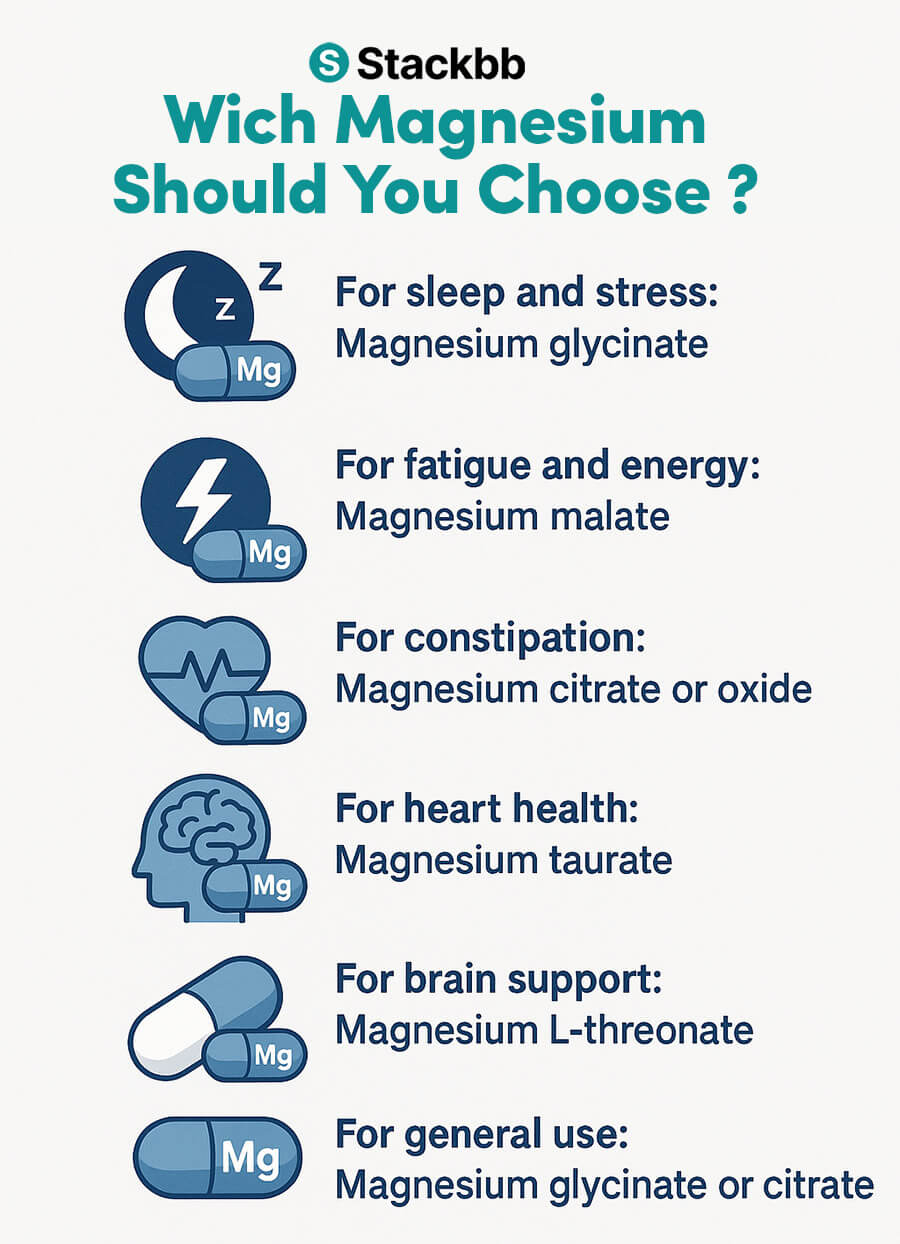
👉 The "best" form of magnesium really depends on your health goal. Here's a quick guide:
- For sleep and stress: Magnesium glycinate.
- For fatigue and energy: Magnesium malate.
- For constipation: Magnesium citrate or oxide.
- For heart health: Magnesium taurate.
- For brain support: Magnesium L-threonate.
- For general use: Magnesium glycinate or citrate.
Bottom Line
Magnesium comes in many forms, and each has its own advantages. Instead of asking "Which magnesium is best overall?", ask "Which magnesium is best for me right now?" Whether you want to improve sleep, ease digestion, boost energy, or support your heart, there's a form tailored to your needs.
Frequently Asked Questions
Which magnesium is best for sleep?
Magnesium glycinate is the top choice for sleep and relaxation. It is well absorbed and gentle on the stomach, helping calm the nervous system without laxative effects.
Which type of magnesium is most absorbable?
Forms like glycinate, malate, and citrate are typically well absorbed. Oxide is less bioavailable and is better suited for occasional constipation than for raising magnesium levels.
What magnesium is best for constipation?
Magnesium citrate is the go-to for mild constipation thanks to its osmotic effect. Magnesium oxide can also help, but it is less absorbable overall.
What magnesium helps with anxiety and stress?
Magnesium glycinate is often preferred for stress and anxiety due to the calming effect of glycine. Some people also do well with taurate for its cardiovascular and soothing benefits.
Which magnesium is best for brain support and focus?
Magnesium L-threonate is notable because it can cross the blood-brain barrier and is often chosen for memory and cognitive support.
How much magnesium should I take daily?
Most supplements provide 200-400 mg of elemental magnesium per day. Start low and adjust based on tolerance and goals. Always check the label for elemental magnesium, not compound weight.
Should I take magnesium with or without food?
Either can work. If you notice stomach upset, take it with food. For sleep benefits, many prefer taking glycinate in the evening.
Related Articles


Latest





Our Content Guidelines
Our content provides educational information about supplements and wellness topics.
-
 Evidence-informed content
We reference peer-reviewed studies and established scientific literature where available. -
 Clear sourcing & transparency
Sources and references are provided when evidence exists, allowing readers to explore further. -
 Updated to reflect new evidence
Articles are updated as new information becomes available.