

Whey Protein Types Explained: Concentrate, Isolate, and Hydrolyzed
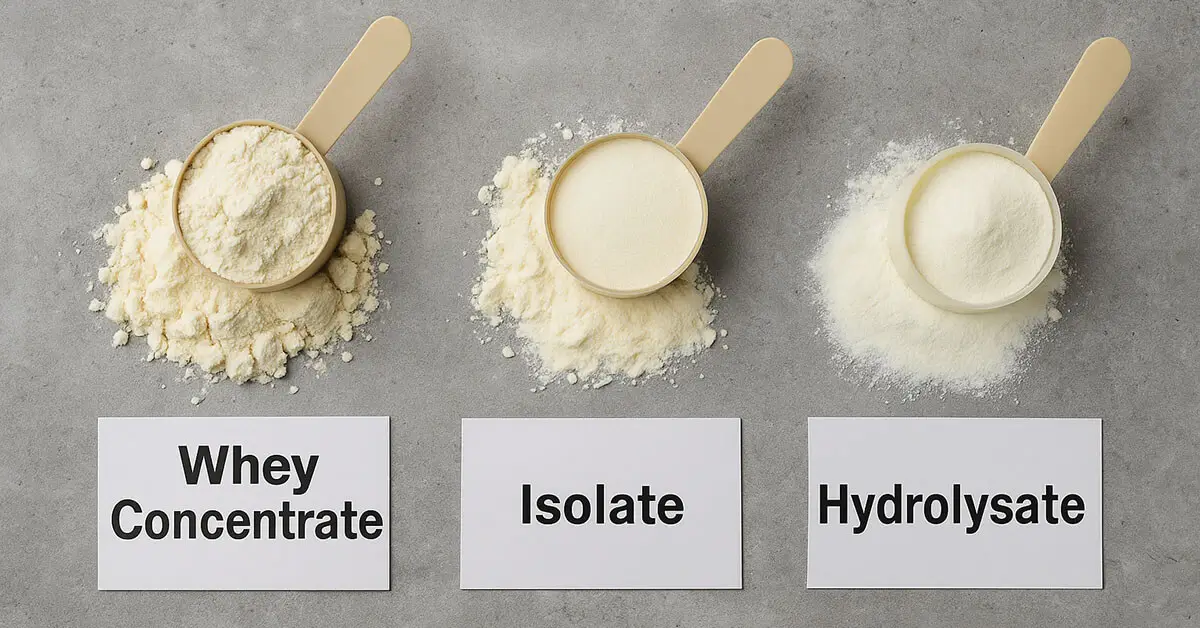
Whey protein is one of the most commonly used supplements for muscle growth and recovery. It provides a high-quality source of protein that is quickly absorbed and rich in essential amino acids.
However, whey protein is available in several forms, including concentrate, isolate, and hydrolyzed whey. Each type differs in how it is processed, how much protein it contains, and how the body absorbs it.
This guide explains the key differences between whey protein, whey isolate, and hydrolyzed whey. It will help you understand how each option supports muscle growth and recovery, and which one may best match your training goals, digestion, and budget.
What is Whey Protein?
Whey protein comes from milk. It's the liquid byproduct of cheese-making that's filtered and processed into powder.
Why is whey so popular?
- It's rich in essential amino acids, especially leucine, which triggers muscle growth (anabolism).
- It's rapidly absorbed, making it perfect for post-workout recovery.
- It has a high biological value, meaning your body uses it efficiently.
But not all whey proteins are the same. The processing methods create three main types: concentrate, isolate, and hydrolysate.
Whey Concentrate: The Classic Choice
Whey concentrate is the most basic and common form of whey protein.
- Protein content: 70-80% protein per serving
- Lactose: Contains small amounts (may cause issues for some)
- Fats & carbs: Includes a bit of each, making it less "pure"
Advantages of Whey Concentrate:
- Cost-effective: Usually the cheapest option
- Good taste and texture: The fats and carbs add creaminess
- Balanced nutrition: Contains some healthy peptides and microfractions
Drawbacks of Whey Concentrate:
- Not suitable for severe lactose intolerance
- May cause bloating in sensitive individuals
- Lower protein percentage compared to isolate or hydrolysate
Who should choose it? Anyone looking for affordable protein for general muscle building without digestive issues.
Whey Isolate: For the Cleanest Protein
Whey isolate is a more filtered form of whey. The additional processing removes almost all lactose and fat.
- Protein content: 90% or more protein per serving
- Lactose: Minimal to none
- Fats & carbs: Almost zero
Advantages of Whey Isolate:
- High protein purity: Ideal for those who want lean gains
- Faster digestion than concentrate
- Lactose-free (or nearly): Easier on digestion
Drawbacks of Whey Isolate:
- Higher price: Filtration costs more
- Less creamy texture compared to concentrate
- Fewer immune-support peptides: Some bioactive compounds are lost during filtration
Who should choose it? People on low-carb diets, cutting phases, or those with mild lactose sensitivity.
Hydrolyzed Whey: The Pre-Digested Option
Hydrolyzed whey (hydrolysate) is whey protein that has been partially broken down into peptides for ultra-fast absorption.
- Protein content: 90%+ protein per serving
- Lactose: Practically zero
- Digestion speed: Fastest of all whey types
Advantages of Hydrolyzed Whey:
- Fast absorption: Ideal for post-workout recovery
- Hypoallergenic: Less likely to cause digestive upset
- May reduce muscle soreness (some small studies suggest this)
Drawbacks of Hydrolyzed Whey:
- Price: The most expensive whey form
- Taste: Can be bitter due to the hydrolysis process
- Not necessary for most people: Unless you're an elite athlete or have specific digestion issues
Who should choose it? Serious athletes, people with digestive sensitivity, or those wanting the fastest absorption possible.
Whey vs Isolate vs Hydrolyzed: Quick Comparison
| Type | Protein % | Lactose | Digestion Speed | Price |
|---|---|---|---|---|
| Whey Concentrate | 70-80% | Yes | Fast | $$ |
| Whey Isolate | 90%+ | No (or very low) | Faster | $$$ |
| Hydrolyzed Whey | 90%+ | No | Fastest | $$$$ |
Which One Should You Choose?
It depends on your goals, budget, and digestion.
- For beginners & budget-conscious lifters: Whey concentrate is usually enough.
- For lactose sensitivity or clean eating phases: Whey isolate is a great choice.
- For elite athletes or fast recovery needs: Hydrolyzed whey can help, but it's optional for most.
When Should You Take Whey Protein?
Timing matters, but not as much as you think.
- Post-workout: To kickstart muscle repair
- As a meal supplement: For busy days when whole food isn't available
- Before bed (optional): Some athletes take casein instead, but whey works if you need protein
The Bottom Line
All forms of whey protein help build muscle, improve recovery, and support lean mass. The differences come down to purity, digestion speed, and price.
Pick the one that matches your lifestyle and budget. What matters most is that you're consistent with your protein intake, not which type of whey you choose.
And remember: supplements support your training, they don't replace it.


Latest



Our Content Guidelines
Our content provides educational information about supplements and wellness topics.
-
 Evidence-informed content
We reference peer-reviewed studies and established scientific literature where available. -
 Clear sourcing & transparency
Sources and references are provided when evidence exists, allowing readers to explore further. -
 Updated to reflect new evidence
Articles are updated as new information becomes available.