

Supplements for Kids to Support Focus & Memory

Supporting a child's progress at school involves more than homework routines and classroom time.
Nutrition plays an important role in brain development, attention, and the ability to process new information.
A balanced diet remains the priority, but some children may not get enough of certain nutrients needed for normal cognitive function.
In those situations, supplements may be used to help address nutritional gaps, when chosen carefully and used appropriately.
In this article, we present nutrients and supplements that are sometimes used to support focus and memory in children, while keeping in mind that any supplement given to a child should always be reviewed and approved by a pediatrician.
Why Nutrition Matters for Focus and Learning
Children's brains are still developing, which means their nutritional needs are higher than many adults realize.
Limited food variety, selective eating, or reduced intake of nutrient-rich foods can affect attention, energy levels, and mental endurance during the school day.
Supplements are not meant to replace healthy meals, but they can be used to support normal brain function when dietary intake is not sufficient.
Supplements Used to Support Focus and Memory in Kids
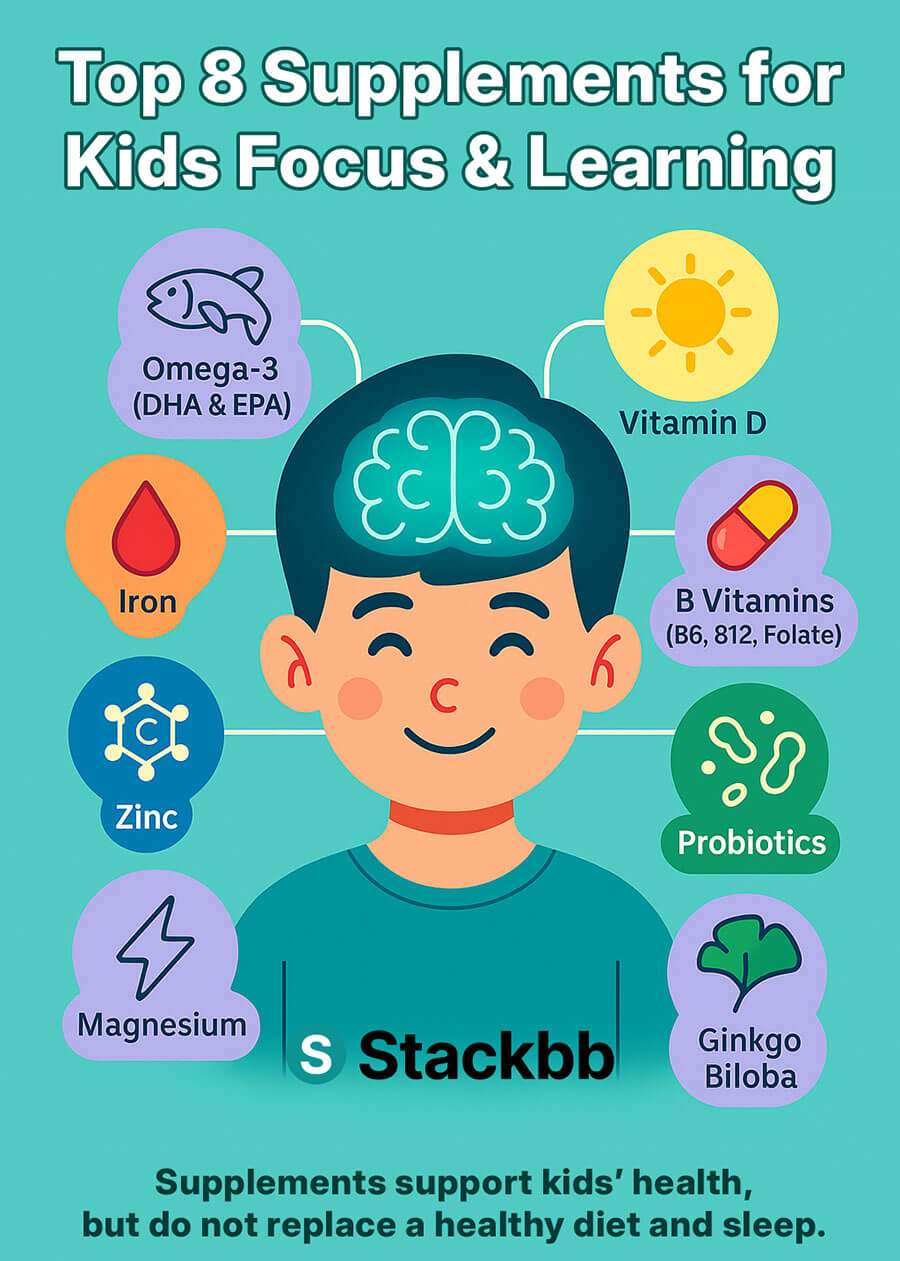
1. Omega-3 Fatty Acids (DHA & EPA)
Omega-3 fatty acids, especially DHA, are structural components of the brain.
DHA supports communication between brain cells and is involved in normal cognitive development during childhood.
Fish, such as salmon and sardines, are primary food sources, but intake is often low in children, making supplementation an option for some families.
2. Iron
Iron is required for oxygen transport in the blood, including to the brain.
Low iron levels may affect energy, attention span, and learning capacity in children.
Because excess iron can be harmful, supplementation should only be considered after medical evaluation.
3. Zinc
Zinc plays a role in brain signaling and neurotransmitter activity.
Adequate zinc intake supports normal attention and memory processes during childhood.
Dietary sources include meat, seeds, dairy products, and legumes, but intake may be low in selective eaters.
4. Magnesium
Magnesium is involved in nerve signaling and muscle relaxation.
In children, adequate magnesium levels are associated with normal sleep patterns and nervous system regulation.
Poor sleep or restlessness can indirectly affect concentration and learning during the day.
5. Vitamin D
Vitamin D is involved in brain development and nervous system function.
Lower vitamin D levels are common in children with limited sun exposure.
Adequate intake supports overall health and may influence cognitive and emotional regulation.
6. B Vitamins (B6, B12, Folate)
B vitamins contribute to energy metabolism and nerve function.
Folate, vitamin B6, and vitamin B12 support neurotransmitter production.
Low intake may affect attention, motivation, and mental stamina.
7. Probiotics
The gut and brain communicate through the gut-brain axis.
Probiotics support gut balance, which may influence mood and stress responses.
Digestive comfort and emotional regulation can indirectly affect attention at school.
8. Ginkgo Biloba (Older Children and Teens)
Ginkgo biloba has been studied for its effects on circulation and memory.
Its use is generally limited to adolescents and should be short-term.
It is not recommended for younger children without medical supervision.
Lifestyle Factors That Influence Learning
Supplements alone cannot compensate for lack of sleep, poor nutrition, or excessive screen time.
Regular physical activity, consistent routines, and balanced meals remain essential for learning and attention.
Nutritional support works best when combined with healthy daily habits.
Safety and Precautions
Children require age-appropriate dosing and formulations designed specifically for them.
Some nutrients, including iron, should only be used when a deficiency is identified.
Always consult a pediatric healthcare professional before starting any supplement.
Conclusion
Certain supplements may help support focus and memory in children by addressing nutritional gaps.
Omega-3s, iron, zinc, magnesium, vitamin D, B vitamins, probiotics, and selected plant extracts are among the options sometimes considered.
They should be used thoughtfully, alongside a balanced diet and healthy lifestyle.
FAQ About Supplements for Kids
Do children always need supplements for focus?
No. Many children meet their needs through diet alone. Supplements are typically considered when intake is insufficient.
Are supplements safe for kids?
They can be, when chosen appropriately and used at suitable doses for age.
How long does it take to notice changes?
This varies depending on the nutrient and the child's baseline status.
Can supplements replace healthy habits?
No. They are intended to support, not replace, good nutrition, sleep, and daily routines.
Related Articles


Latest




Our Content Guidelines
Our content provides educational information about supplements and wellness topics.
-
 Evidence-informed content
We reference peer-reviewed studies and established scientific literature where available. -
 Clear sourcing & transparency
Sources and references are provided when evidence exists, allowing readers to explore further. -
 Updated to reflect new evidence
Articles are updated as new information becomes available.