

Biohacking: Understanding the Concept and Its Practical Uses

Biohacking is a broad term used to describe intentional lifestyle changes aimed at supporting how your body and mind function in daily life.
It typically focuses on everyday factors such as sleep routines, nutrition choices, physical activity, stress management, and, in some cases, the careful use of supplements.
The general approach is observational. You pay attention to how your body responds to specific habits, make small adjustments, and keep those that feel sustainable over time.
These changes are usually practical and repeatable, rather than extreme or experimental.
While some forms of biohacking involve advanced tools or medical supervision, most people are interested in accessible goals such as maintaining focus, managing energy levels, improving sleep consistency, and supporting long-term wellbeing.
This guide explains what biohacking involves, which approaches are commonly considered low risk, and how supplements are sometimes discussed as part of a structured and cautious routine.
What Does Biohacking Actually Mean?
At its core, biohacking involves making deliberate changes to daily habits and observing the outcomes. This can include adjusting meal timing, sleep duration, exercise patterns, or exposure to screens.
Rather than following strict rules, the focus is on awareness. You notice how changes affect energy, mood, concentration, or recovery, then refine your routine based on personal feedback.
The concept itself is not new. Many traditional practices have long emphasized sleep timing, diet quality, and mental discipline. The modern term gained popularity as people began applying tracking tools and structured self-observation to everyday life.
Is Biohacking Safe?
Safety depends on the methods used. Basic adjustments such as improving sleep habits, increasing daily movement, or reducing late-night screen exposure are generally considered low risk for most people.
More aggressive practices, including unregulated substances or invasive techniques, carry higher levels of risk and should not be attempted without appropriate medical guidance.
For many individuals, biohacking encourages conservative changes that support normal body processes rather than pushing biological limits.
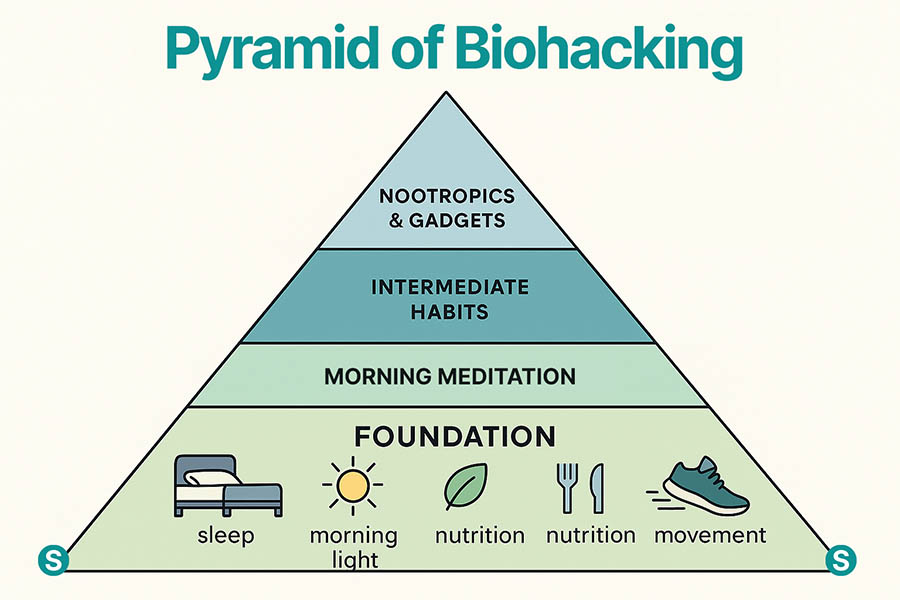
Beginner Biohacking Habits to Start With
Morning Light Exposure
Spending time outdoors shortly after waking may help regulate daily sleep and wake patterns. Morning light exposure is often associated with more consistent sleep timing and daytime alertness.
Temperature Contrast in Showers
Ending a warm shower with brief exposure to cooler water is sometimes used to promote alertness. Responses vary between individuals, and short durations are commonly sufficient.
Gentle Time-Restricted Eating
Rather than extreme fasting schedules, many beginners start with a simple eating window, such as eating within a 12-hour period. This approach may support energy regulation without adding dietary stress.
Evening Light Management
Reducing screen brightness and limiting exposure to bright light in the evening may support natural sleep onset. Built-in device filters are often used to reduce blue light after sunset.
Movement Breaks During the Day
Short periods of movement throughout the day can help reduce stiffness and support circulation. Common examples include light stretching or brief walks.
Sleep Tracking
Specialized devices are not required to notice patterns. A simple sleep journal or basic phone app can help identify habits that influence sleep quality.
Exploring the Role of Cognitive Supplements
After sleep, nutrition, and stress management are relatively consistent, some people explore supplements often described as nootropics. These substances are discussed for their potential role in supporting focus, memory, and mental clarity.
They are not intended to replace foundational habits or produce immediate effects. Their role is generally supportive and can vary from one person to another.
L-Theanine with Caffeine
Caffeine is widely used for alertness, but it may cause restlessness in some individuals.
L-theanine is an amino acid naturally found in tea. When taken with caffeine, it is often discussed for supporting focus while reducing feelings of tension.
Rhodiola Rosea
Rhodiola is an herb traditionally used in contexts related to stress adaptation. It is commonly discussed for mental fatigue and energy regulation during demanding periods.
In a clinical study published in 2020, adults using standardized rhodiola extract reported lower perceived fatigue during prolonged mental stress.
Bacopa Monnieri
Bacopa is a plant traditionally used in practices related to learning and memory. Its effects are typically gradual and associated with consistent use over several weeks.
Lion's Mane Mushroom
Lion's Mane contains compounds that have been examined for their interaction with nerve-related processes. It is often discussed in relation to mental clarity and long-term cognitive maintenance.
Omega-3 Fatty Acids
Omega-3 fatty acids, particularly DHA and EPA, are components of brain cell membranes. Adequate intake is associated with normal cognitive and cardiovascular function.
Creatine Monohydrate
Creatine plays a role in cellular energy production in muscle and brain tissue. It is sometimes discussed for mental endurance during cognitively demanding tasks.
Alpha-GPC or Citicoline
These compounds provide choline, a nutrient involved in neurotransmitter production and brain cell structure. They are often explored in the context of focus and memory support.
Final Thoughts
Biohacking is generally approached as a gradual process rather than a collection of extreme methods. Small, consistent adjustments to sleep, movement, and nutrition often form the foundation.
Supplements may offer additional support for some individuals, but they tend to be most relevant when basic habits are already in place.
Individual responses differ. Paying attention to how you feel, making measured adjustments, and prioritizing safety are central to building a routine that supports long-term wellbeing.
Related Articles


Latest




Our Content Guidelines
Our content provides educational information about supplements and wellness topics.
-
 Evidence-informed content
We reference peer-reviewed studies and established scientific literature where available. -
 Clear sourcing & transparency
Sources and references are provided when evidence exists, allowing readers to explore further. -
 Updated to reflect new evidence
Articles are updated as new information becomes available.