

Can Slippery Elm Help with Acid Reflux?
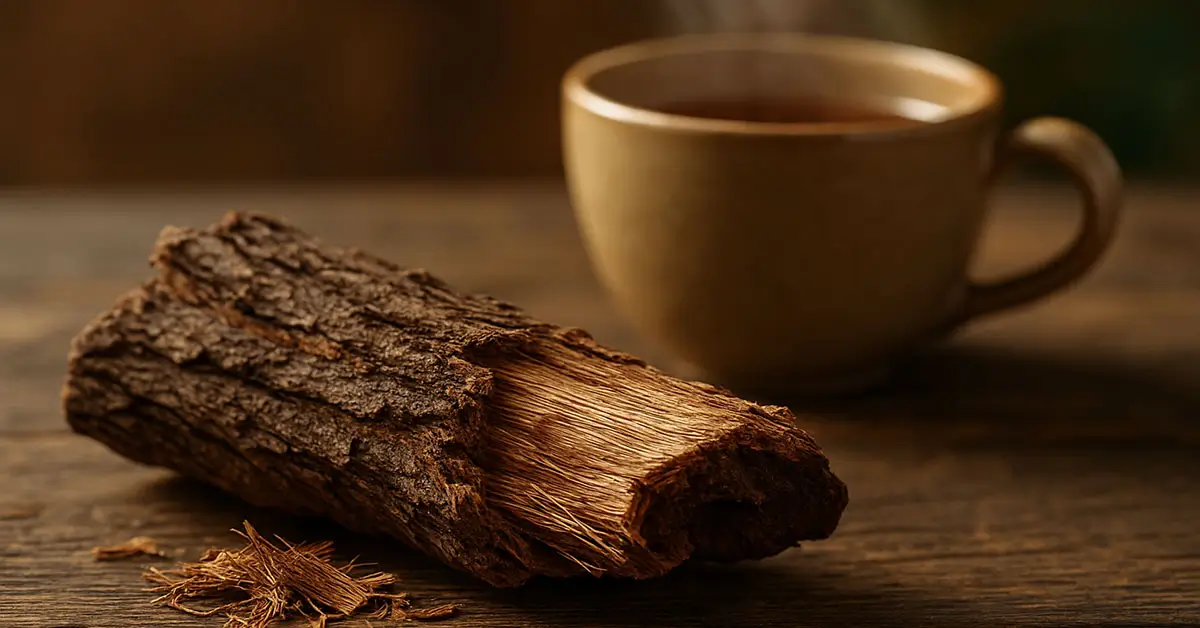
Can Slippery Elm Help with Acid Reflux?
Acid reflux commonly causes a burning sensation behind the breastbone that can travel into the throat. Symptoms often worsen after meals or when lying down.
Medications such as antacids or acid reducers can help, but you may be looking for a gentler option to support your digestive tract.
One plant that often comes up in this context is Slippery Elm.What Makes Slippery Elm Different
Slippery Elm comes from the inner bark of the Ulmus rubra tree, native to North America.
It contains a type of soluble fiber called mucilage.
When mucilage mixes with water, it forms a thick, soothing gel. Instead of lowering stomach acid, Slippery Elm works by coating irritated tissues.
If acid reflux leaves your throat or stomach lining feeling raw, this coating effect may help reduce discomfort by limiting direct contact with stomach acid.
How Slippery Elm May Help with Acid Reflux
Acid reflux symptoms are not only about acid levels. Irritation of the esophagus plays a major role in the burning sensation.
Slippery Elm may help by calming this irritation. The mucilage can stick to the lining of the throat and stomach, which may ease burning and soreness after reflux episodes.
This makes it different from antacids or proton pump inhibitors. It does not block acid production. It focuses on comfort and protection.
What Human Studies Tell Us So Far
Large, high-quality trials on Slippery Elm alone are still missing. Most available data comes from small human studies and traditional use.
In a small clinical trial published in the early 2010s, adults with upper digestive discomfort took a herbal formula that included Slippery Elm. After several weeks, many participants reported less heartburn and reduced reflux-related irritation.
Because Slippery Elm was combined with other herbs, it is not possible to credit the results to this plant alone. Still, these findings support its long-standing use for soothing the digestive lining.
Traditional medicine has used Slippery Elm for centuries for throat and stomach irritation, which aligns with how it is used today for reflux-related discomfort.
How to Take Slippery Elm for Reflux
Slippery Elm is available as powder, capsules, and lozenges. For acid reflux, powders and capsules are the most common options.
Powdered Slippery Elm is usually mixed with water to form a thick drink. Capsules offer a simpler option if you prefer not to prepare a drink.
Slippery Elm can slow the absorption of other medications because it coats the digestive tract.
A gap of at least 2 hours before or after medications is usually recommended.
What Slippery Elm Can and Cannot Do
Slippery Elm does not stop reflux from happening. It does not prevent acid from moving upward.
If reflux is triggered by large meals, late-night eating, or certain foods, those factors still need attention.
Slippery Elm is best seen as supportive care. It may reduce irritation and make symptoms easier to tolerate, but it does not address the root cause of reflux.
Is Slippery Elm Safe to Use?
Slippery Elm is generally well tolerated when used as directed. Side effects are uncommon.
Because reliable safety data during pregnancy and breastfeeding is limited, it is usually advised to avoid it during these periods.
If reflux symptoms are frequent, severe, or associated with difficulty swallowing, unexplained weight loss, or chest pain, medical evaluation is important.
The Bottom Line
Slippery Elm does not replace acid reflux medication, but it may offer comfort if irritation is your main concern.
By coating and calming the digestive lining, it may ease burning sensations linked to reflux episodes.


Latest


Our Content Guidelines
Our content provides educational information about supplements and wellness topics.
-
 Evidence-informed content
We reference peer-reviewed studies and established scientific literature where available. -
 Clear sourcing & transparency
Sources and references are provided when evidence exists, allowing readers to explore further. -
 Updated to reflect new evidence
Articles are updated as new information becomes available.