

Supplements and Tendonitis: What to Consider

Tendonitis, also referred to as tendinitis, is a condition in which a tendon becomes irritated and painful. Tendons are the strong connective tissues that link muscles to bones, and when they are overloaded or stressed repeatedly, discomfort and stiffness can develop.
Symptoms often include localized pain, tenderness, and reduced movement around the affected area. Because tendons have a relatively limited blood supply, recovery can feel slow compared with muscle injuries.
Standard care usually focuses on rest, activity modification, ice, and physical therapy. In this context, some people also look at vitamins and supplements as supportive tools alongside these measures.
The sections below outline nutrients and supplements that are commonly considered in relation to tendon health and recovery.
Understanding Tendonitis
Tendonitis often develops after repetitive movements, sudden increases in training load, or prolonged strain. It can affect many areas of the body, including the shoulders, elbows, wrists, knees, and Achilles tendon.
If symptoms persist over time, the condition may progress toward tendinopathy, where structural changes occur within the tendon itself. At that stage, management usually requires a longer-term rehabilitation approach.
Because tendon repair depends on adequate nutrition, circulation, and mechanical loading, supportive strategies are typically combined rather than used in isolation.
Vitamins and Supplements to Consider
Vitamin C
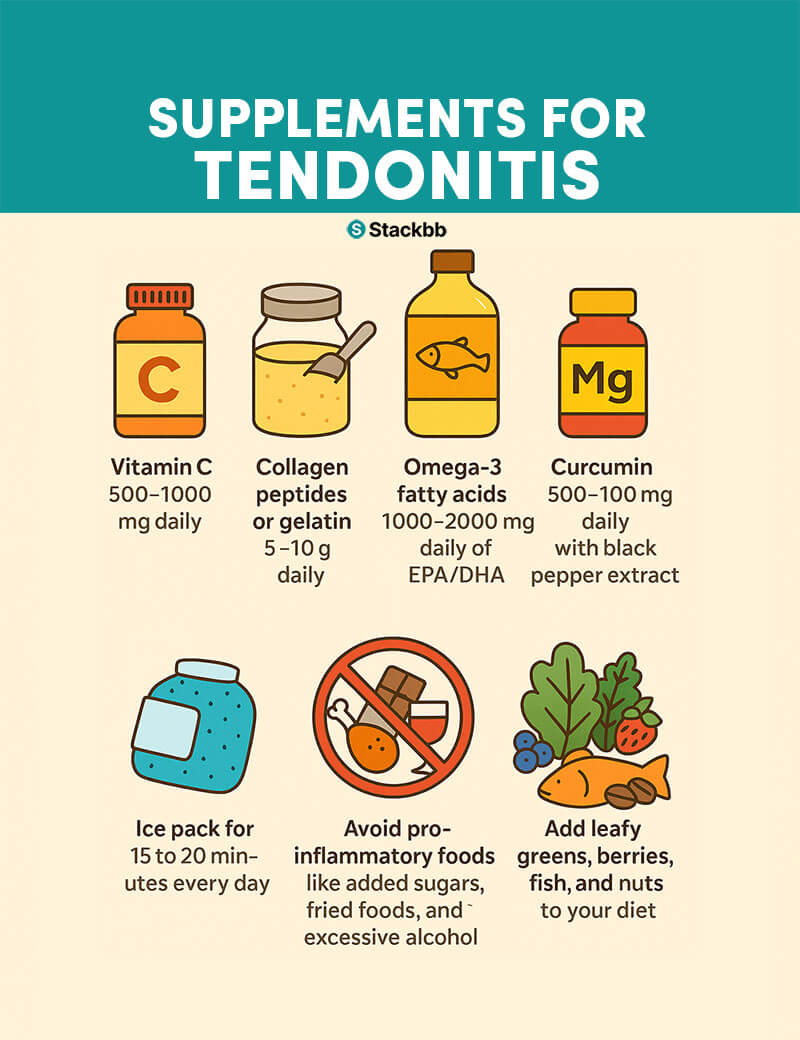
Vitamin C is required for collagen synthesis, which is a key structural component of tendons. Adequate intake supports normal connective tissue maintenance and repair.
📊 Clinical Study: Human studies indicate that vitamin C intake supports collagen production, particularly when combined with mechanical loading and sufficient protein intake (study).
Vitamin D
Vitamin D contributes to normal muscle function and bone health. While it does not act directly on tendons, adequate vitamin D status may reduce excess mechanical stress on tendons by supporting surrounding tissues.
📊 Clinical Study: Observational data associate low vitamin D levels with a higher prevalence of tendon disorders, particularly in older adults (study).
Collagen
Collagen peptides and gelatin provide amino acids used in connective tissue turnover. They are often paired with vitamin C to support collagen formation during rehabilitation.
📊 Clinical Study: Controlled trials suggest that collagen hydrolysate consumed with vitamin C can increase markers of collagen synthesis in tendons and ligaments (study).
Curcumin
Curcumin is a compound derived from turmeric and is widely used for its role in inflammatory balance. In the context of tendon discomfort, it is mainly considered for supporting comfort and mobility.
📊 Clinical Study: Multiple clinical trials show that curcumin supplementation is associated with lower inflammatory markers and improved joint comfort (study).
Omega-3 Fatty Acids
Omega-3 fatty acids from fish oil are involved in inflammatory regulation and tissue recovery processes. They are often used to support comfort during musculoskeletal rehabilitation.
📊 Clinical Study: Research indicates that omega-3 intake is associated with reduced inflammatory responses and improved recovery markers in connective tissues (study).
Magnesium
Magnesium supports normal muscle relaxation and nerve signaling. Adequate magnesium intake may help limit excessive muscle tension that can place additional load on tendons.
Additional Nutrients Sometimes Included
MSM: A sulfur-containing compound involved in connective tissue structure.
Boswellia serrata: A plant extract used to support inflammatory balance.
Bromelain: An enzyme derived from pineapple, often used in post-injury recovery contexts.
Evidence and Practical Limits
Most supplement studies related to tendon health are modest in size and duration. Individual responses vary, and supplements are generally most useful when combined with structured rehabilitation, adequate protein intake, and gradual loading of the affected tendon.
Consult a healthcare professional before starting new supplements, particularly if you take medication or manage a chronic condition.
A Practical Support Approach
Rather than relying on a single product, some people choose a combined approach that addresses different aspects of tendon recovery. This may include:
- Vitamin C alongside protein intake
- Collagen peptides or gelatin paired with rehabilitation exercises
- Omega-3 fatty acids for inflammatory balance
- Magnesium to support muscle relaxation
These measures are typically paired with rest periods, gradual return to activity, and guidance from a physical therapist. Diets rich in fruits, vegetables, fish, and nuts also contribute nutrients relevant to tissue repair.
Bottom Line
Vitamins and supplements do not replace standard tendonitis care, but some nutrients may support connective tissue maintenance and comfort when used alongside rest and rehabilitation. Vitamin C, collagen, omega-3 fatty acids, and curcumin are among the most commonly considered options.
FAQs
Can supplements cure tendonitis?
No. Supplements do not cure tendonitis. They may provide supportive benefits, but rest and guided rehabilitation remain central to recovery.
Which vitamins are most relevant for tendon health?
Vitamin C is important for collagen synthesis, while vitamin D supports muscle and bone function that influences tendon loading.
Is collagen useful for tendon support?
Collagen peptides provide amino acids used in connective tissue turnover and are often paired with vitamin C during rehabilitation.
How long before noticing changes?
Most nutritional strategies require several weeks of consistent use and should be evaluated alongside functional improvements from therapy.
Can omega-3 fatty acids support tendon comfort?
Omega-3s are commonly used to support inflammatory balance and may contribute to overall comfort during recovery.
Related Articles


Latest



Our Content Guidelines
Our content provides educational information about supplements and wellness topics.
-
 Evidence-informed content
We reference peer-reviewed studies and established scientific literature where available. -
 Clear sourcing & transparency
Sources and references are provided when evidence exists, allowing readers to explore further. -
 Updated to reflect new evidence
Articles are updated as new information becomes available.