

Ayurvedic Herbs: Traditional Remedies Still Used Today
By Gladys Mascardo in Detox & Liver SupportHeart HealthAnti-AgingImmunity
|
Last updated : January 12, 2026
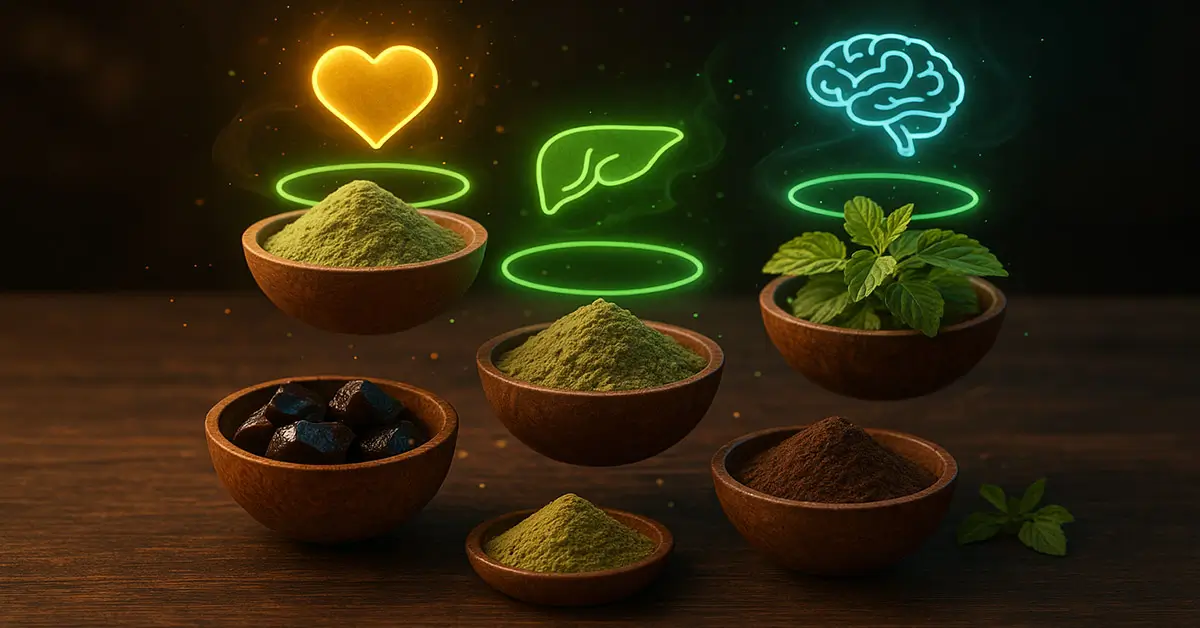
Ayurveda is a traditional system of medicine that originated in India and has been practiced for centuries. It relies on herbs, plant extracts, and mineral preparations to support balance in the body and maintain overall wellbeing.
Many Ayurvedic remedies are still widely used today, both in traditional settings and in modern wellness routines. Their continued use is largely based on historical practice, with some ingredients also being evaluated in controlled human studies.
This article provides an overview of commonly used Ayurvedic herbs, grouped by their traditional areas of use. The focus is on established practices, available clinical observations, and practical context, rather than generalized claims.
Herbs Traditionally Used for the Heart
Arjuna (Terminalia arjuna)
In Ayurveda, Arjuna bark has long been used as a supportive herb for the cardiovascular system. Traditional texts describe its use in maintaining heart function and circulation.
📊 Clinical Study: Several randomized trials conducted in India reported improvements in symptoms of stable angina, along with modest effects on cardiac output and blood pressure, with generally good tolerability.
Guggul (Commiphora mukul)
Guggul is a resin traditionally used in Ayurvedic formulations related to lipid balance and metabolism. It has also been incorporated into preparations aimed at weight management.
📊 Clinical Study: Human studies have observed that guggulsterones may influence triglycerides and LDL cholesterol levels in certain populations, though responses appear variable.
Amla (Indian Gooseberry)
Amla is traditionally valued for its nutritional content and its role in rejuvenation practices. It is commonly included in Ayurvedic approaches related to digestion and cardiovascular support.
📊 Clinical Study: Human trials have reported reductions in LDL cholesterol and markers of oxidative stress, along with improvements in endothelial function.
For Detoxification & Cleansing
Triphala
Triphala is a blend of three fruits used in Ayurveda for digestive regularity and gentle cleansing. It is commonly taken as a daily tonic to support bowel function.
📊 Clinical Study: Randomized controlled trials have shown improvements in bowel movement frequency and relief of mild constipation, along with antioxidant activity.
Neem (Azadirachta indica)
Neem has traditionally been used in Ayurveda for skin-related concerns and general cleansing practices. Various parts of the plant are used in both oral and topical preparations.
📊 Clinical Study: Limited human studies suggest potential effects on blood sugar control and skin conditions, while antimicrobial properties have mainly been observed in laboratory settings.
Guduchi (Tinospora cordifolia)
Guduchi is traditionally classified as a Rasayana herb, a term used in Ayurveda for substances associated with long-term vitality and resilience.
📊 Clinical Study: Clinical observations in India have reported support for liver function and immune modulation in individuals recovering from illness.
For Immunity
Guduchi (Tinospora cordifolia)
In immune-focused formulations, Guduchi is commonly used to support the body’s response to seasonal challenges and recovery periods.
📊 Clinical Study: A 2014 randomized controlled trial in individuals with allergic rhinitis reported reductions in sneezing, nasal congestion, and itching, without major adverse effects.
Tulsi (Holy Basil)
Tulsi is traditionally used in Ayurveda to support respiratory comfort and stress adaptation. It is commonly consumed as a tea or extract.
📊 Clinical Study: Controlled trials in India have reported shorter duration and reduced frequency of common respiratory infections, along with changes in immune activity markers.
For Anti-Aging & Vitality
Shilajit
Shilajit is a mineral-rich substance traditionally used in rejuvenation practices. It is often included in formulations aimed at supporting energy and physical resilience.
📊 Clinical Study: A double-blind, placebo-controlled study observed increases in free testosterone levels and reduced fatigue scores in healthy adult men using purified Shilajit.
Chyavanprash
Chyavanprash is a traditional herbal preparation combining Amla with multiple botanicals, ghee, and honey. It is commonly consumed as a daily tonic.
📊 Traditional Use: While large-scale clinical trials are limited, Chyavanprash has a long history of daily use in India for general vitality.
For Mental Wellbeing
Gotu Kola (Centella asiatica)
Gotu Kola is traditionally associated with mental clarity and calm. It is used in Ayurvedic practices related to memory and stress balance.
📊 Clinical Study: Human studies have reported improvements in working memory and reductions in anxiety symptoms, particularly in older adults.
Mucuna pruriens
Mucuna contains naturally occurring L-Dopa and is traditionally used in formulations related to mood, motivation, and reproductive health.
📊 Clinical Study: Clinical trials have examined its use in Parkinson’s disease management and male fertility, with measured effects on motor symptoms and sperm quality.
For Women's Wellbeing
Shatavari (Asparagus racemosus)
Shatavari is traditionally used in Ayurveda to support female reproductive health, including lactation and comfort during menopause.
📊 Clinical Study: Small clinical studies have reported improvements in milk production in breastfeeding women and relief of menopausal symptoms.
Conclusion
Ayurvedic herbs such as Arjuna, Amla, Shilajit, and Tulsi remain widely used today, reflecting long-standing traditional practices.
While some ingredients have been evaluated in controlled human studies, others rely primarily on historical use. Individual responses can vary depending on health status, dosage, and product quality.
Before adding Ayurvedic supplements to your routine, it is important to consider potential interactions and consult a qualified healthcare professional when appropriate.
FAQ
What are Ayurvedic herbs?
Ayurvedic herbs are plants, roots, and natural substances traditionally used in Ayurveda to support balance and general wellbeing.
Are Ayurvedic herbs proven to work?
Some Ayurvedic herbs have been studied in human trials for specific uses, while others are primarily supported by long-standing traditional practice.
Can Ayurvedic herbs cause side effects?
Side effects are possible, particularly with high doses or interactions with medications. Quality, dosage, and individual health factors all matter.
Which Ayurvedic herbs are commonly used for mental wellbeing?
Herbs such as Tulsi, Gotu Kola, and Mucuna pruriens are traditionally used in practices related to stress balance, mood, and mental clarity.
Related Articles


Latest




Our Content Guidelines
Our content provides educational information about supplements and wellness topics.
-
 Evidence-informed content
We reference peer-reviewed studies and established scientific literature where available. -
 Clear sourcing & transparency
Sources and references are provided when evidence exists, allowing readers to explore further. -
 Updated to reflect new evidence
Articles are updated as new information becomes available.