

What Research Shows About Supplements and Depression ?
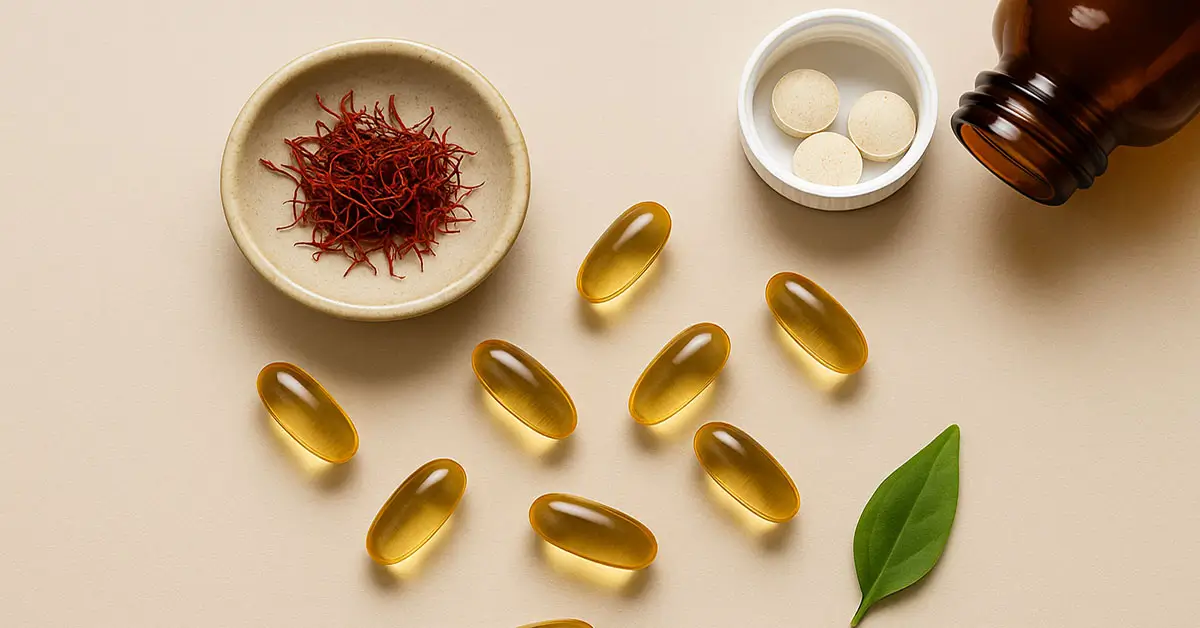
Depression is complex. Biology, hormones, sleep, stress, nutrition, and gut health can all influence mood.
Supplements are not a treatment for depression, but some nutrients and botanicals have been studied in people with mild to moderate symptoms or in those with identified deficiencies.
Below is a clear overview of supplements that have been evaluated in clinical studies, with simple explanations of what the research shows. This information does not replace medical care.
Omega-3 (EPA & DHA)
Omega-3 fatty acids from fish oil or algae support brain cell membranes and communication between neurons.
EPA appears to be more relevant than DHA in studies focused on depressive symptoms, while DHA remains important for overall brain structure.
📊 Clinical Study: A 2021 review found small to modest improvements in depressive symptoms compared with placebo. The certainty of the evidence was rated low to very low.
SAMe
SAMe is involved in methylation, a process required to produce neurotransmitters such as serotonin and dopamine.
Supplemental SAMe has been studied as an add-on to standard care and in comparison with antidepressant medication.
📊 Clinical Study: A 2024 review of randomized trials reported improvements in depressive symptoms, with overall acceptable tolerance compared with placebo or antidepressants.
Important: SAMe may increase mood elevation in people with bipolar disorder and should only be considered with medical supervision.
Vitamin D
Vitamin D receptors are present in brain regions involved in mood regulation.
Low vitamin D status is common in people with depression. Correcting a deficiency may support overall health and mood, while benefits are less clear when levels are already adequate.
📊 Clinical Study: A 2023–2024 meta-analysis found a small but statistically significant reduction in depressive symptoms with vitamin D₃ supplementation.
5-MTHF (L-Methylfolate)
5-MTHF is the active form of folate and plays a role in the synthesis of serotonin, dopamine, and norepinephrine.
Some people carry genetic variants that reduce their ability to convert folic acid into this active form, which may affect brain folate availability.
📊 Clinical Study: In a 2012 trial, adults with incomplete response to antidepressants experienced greater symptom improvement when 5-MTHF was added compared with placebo.
Note: Folate works alongside vitamins B6 and B12. Low status of these nutrients is associated with elevated homocysteine, fatigue, and cognitive symptoms.
St. John’s Wort
St. John’s wort has been widely studied in mild to moderate depression.
It appears to influence serotonin, dopamine, and norepinephrine signaling, but interactions with medications are a major concern.
📊 Clinical Study: Systematic reviews and meta-analyses report that St. John’s wort performs better than placebo and similarly to standard antidepressants in mild to moderate cases.
Important: St. John’s wort can reduce the effectiveness of many medications and should not be combined with antidepressants without medical guidance.
Saffron
Saffron contains bioactive compounds such as crocin and safranal that influence neurotransmitter activity and inflammatory pathways.
Among botanicals, saffron shows relatively consistent results in clinical research.
📊 Clinical Study: Meta-analyses and randomized trials show saffron outperforming placebo and producing effects comparable to some antidepressants in mild to moderate depression.
Note: Avoid use during pregnancy. Use caution when combined with medications that affect serotonin.
Probiotics
The gut and brain communicate through immune signals, hormones, and nerve pathways.
Certain probiotic strains have been studied for their effects on stress response, inflammation, and mood regulation.
The most studied strains include Lactobacillus rhamnosus (HN001), Bifidobacterium longum (NCC3001), and combinations of L. helveticus with B. bifidum.
📊 Clinical Study: A 2021 meta-analysis found that probiotics reduced depressive symptoms when used alongside antidepressants, but not reliably as stand-alone support.
A 2022 randomized trial reported mood improvements alongside measurable changes in gut microbiota and brain activity patterns.
Takeaway
Supplements may offer supportive benefits, but they do not replace medical care, psychotherapy, or prescribed treatment.
If symptoms are moderate to severe, worsening, or include thoughts of self-harm, professional help should be sought immediately.
- Most consistent research: saffron for mild to moderate symptoms, omega-3s for modest support, vitamin D when deficient, and L-methylfolate as an add-on in some cases.
- Test when possible: vitamin D, B12, folate, and homocysteine can help guide decisions.
- One change at a time: introduce supplements gradually and monitor sleep, energy, and mood over several weeks.
- Watch interactions: especially with St. John’s wort and SAMe.
FAQs
Can supplements replace therapy or medication?
No. Supplements are not a replacement for professional mental health care.
Which supplements are most studied for depression?
Saffron, omega-3 fatty acids, SAMe, vitamin D, and L-methylfolate have the strongest clinical research, mainly for mild to moderate symptoms.
How long do studies usually last?
Most trials report outcomes after 6 to 12 weeks of consistent use.
Are interactions possible?
Yes. Some supplements can interact with medications. Medical guidance is essential before starting any new supplement.


Latest

Our Content Guidelines
Our content provides educational information about supplements and wellness topics.
-
 Evidence-informed content
We reference peer-reviewed studies and established scientific literature where available. -
 Clear sourcing & transparency
Sources and references are provided when evidence exists, allowing readers to explore further. -
 Updated to reflect new evidence
Articles are updated as new information becomes available.