

Tryptophan and Melatonin: Key Differences for Sleep Support
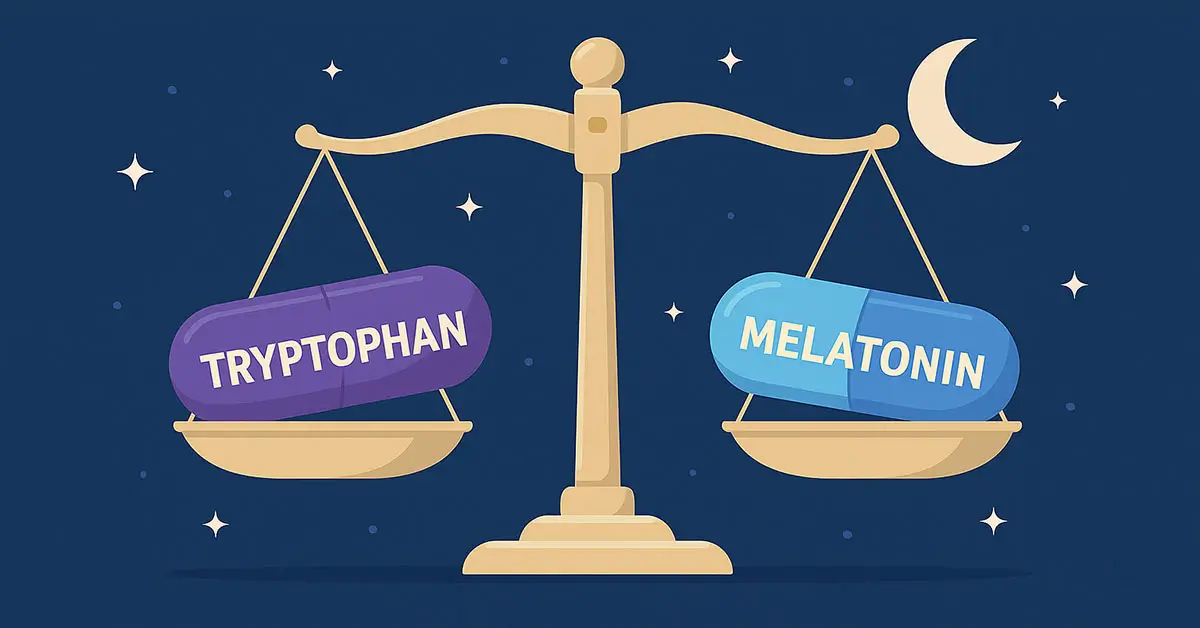
Difficulty falling asleep or waking up feeling unrested is a common issue. Many people look to natural supplements to improve their sleep, especially when lifestyle changes alone are not enough.
Two of the most commonly discussed options are tryptophan and melatonin. Both are connected to sleep, but they influence the body in very different ways.
Understanding how each one works can help you choose the option that best matches your sleep concerns.
Understanding Tryptophan
Tryptophan is an essential amino acid. This means the body cannot produce it on its own and must obtain it from food or supplements.
Once consumed, tryptophan is used to produce serotonin, a neurotransmitter involved in mood regulation, relaxation, and emotional balance.
Serotonin then serves as the precursor for melatonin, the hormone that helps regulate sleep timing.
Because of this process, tryptophan supports sleep indirectly by helping the body create the compounds it needs for relaxation and nighttime signaling.
Dietary sources of tryptophan include poultry, eggs, dairy products, nuts, and seeds. Supplements offer a more concentrated intake and are often used by people seeking ongoing support for sleep quality and mood stability.
Understanding Melatonin
Melatonin is a hormone produced naturally by the pineal gland in the brain.
Its primary role is to regulate the circadian rhythm, the internal system that controls sleep and wake cycles.
Under normal conditions, melatonin levels rise in the evening as light exposure decreases and fall again in the morning when the body prepares to wake.
As a supplement, melatonin acts as a direct signal to the brain that it is time to sleep.
This is why it is often used for jet lag, shift work, or situations where sleep timing has been disrupted.
How They Work Differently
Tryptophan: Supporting the Sleep Pathway
Tryptophan does not trigger sleep immediately.
Instead, it supports the body's natural production of serotonin and melatonin over time.
This gradual effect may benefit people who experience light sleep, stress-related restlessness, or mood-related sleep disturbances.
Its influence tends to be subtle and cumulative rather than immediate.
Melatonin: Sending a Sleep Signal
Melatonin works more directly by signaling to the brain that nighttime has arrived.
For many people, this effect begins within an hour of taking it.
This makes melatonin useful for situations where sleep timing is the main issue rather than sleep depth or overall quality.
Benefits and Best Uses
When Tryptophan May Be the Better Choice
Tryptophan may be helpful for individuals who struggle with poor sleep quality, frequent nighttime awakenings, or stress-related sleep issues.
Because it supports serotonin production, it may also contribute to improved mood and emotional balance.
It is often chosen by those looking for a more nutritional and long-term approach to sleep support.
When Melatonin May Be the Better Choice
Melatonin is often preferred when sleep timing is disrupted.
This includes travel across time zones, irregular work schedules, or difficulty falling asleep at a desired bedtime.
Its primary role is helping the body adjust to a new sleep schedule rather than improving sleep quality over time.
Dosage and Safety Considerations
Tryptophan supplements are generally well tolerated, but caution is advised for people taking medications that affect serotonin levels, such as certain antidepressants.
Melatonin is considered safe for short-term use, but higher doses do not necessarily lead to better results and may interfere with the body's natural rhythm if used daily for long periods.
For both supplements, starting with the lowest effective dose is recommended.
Which One Is Right for You?
The best choice depends on the nature of your sleep difficulty.
Those seeking long-term support for sleep quality and emotional balance may benefit more from tryptophan.
Those needing quicker help with sleep timing may respond better to melatonin.
Some individuals use tryptophan regularly and reserve melatonin for occasional disruptions, but this approach should be discussed with a healthcare professional.
Conclusion
Tryptophan and melatonin both play important roles in sleep regulation, but they serve different purposes.
Tryptophan supports the body's natural sleep chemistry over time, while melatonin provides a direct signal that it is time to rest.
Choosing between them depends on whether your goal is long-term sleep support or short-term adjustment.
FAQ about Tryptophan and Melatonin
Can you take tryptophan and melatonin together?
Yes, some people combine them, but it should be done with caution. Because they act on the same sleep pathway, it's best to start with a low dose and consult a healthcare provider first.
Is tryptophan safer than melatonin?
Tryptophan is generally well tolerated and works more like a nutritional support, while melatonin is safe for short-term use but less studied for long-term daily use. Both have precautions depending on your health situation.
Which works faster: tryptophan or melatonin?
Melatonin works faster, usually within 30 to 60 minutes. Tryptophan is slower because it has to be converted into serotonin and then melatonin before helping you sleep.
What foods naturally contain tryptophan?
Turkey, chicken, eggs, cheese, nuts, and seeds are all rich in tryptophan. Adding these foods to your diet can naturally support your body's melatonin production and improve sleep over time.


Latest




Our Content Guidelines
Our content provides educational information about supplements and wellness topics.
-
 Evidence-informed content
We reference peer-reviewed studies and established scientific literature where available. -
 Clear sourcing & transparency
Sources and references are provided when evidence exists, allowing readers to explore further. -
 Updated to reflect new evidence
Articles are updated as new information becomes available.