

CoQ10 and Heart Health: Is Supplementation Relevant After 50?
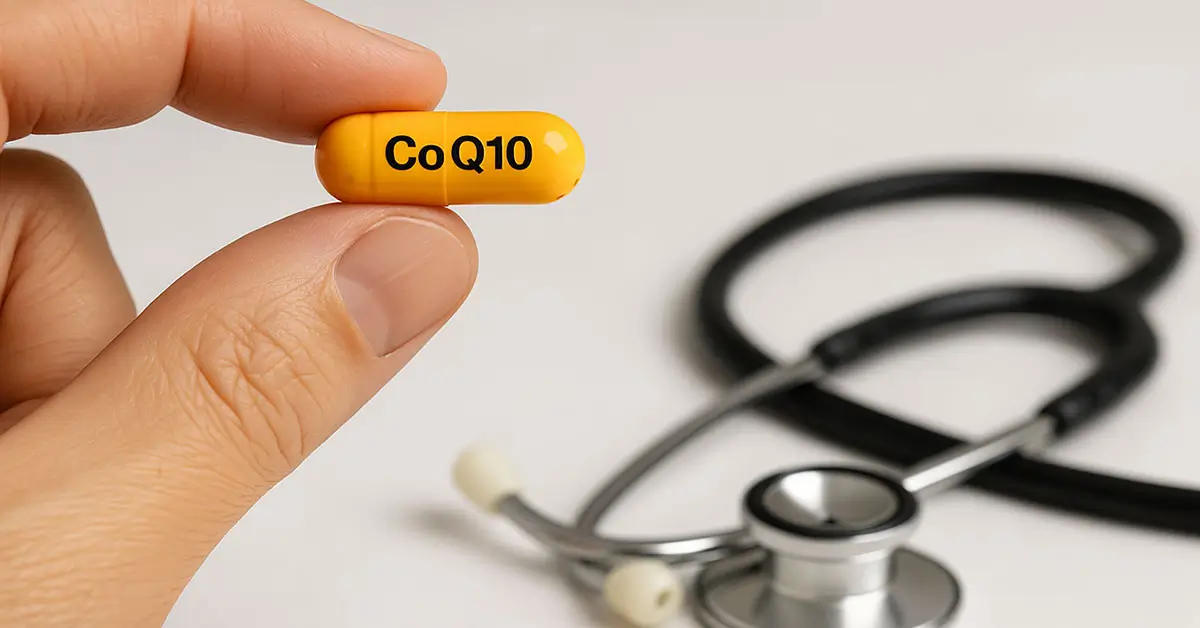
After age 50, heart health often requires closer attention. CoQ10, short for coenzyme Q10, is a compound your body produces naturally. It is present in every cell and is especially concentrated in the heart, where energy demand is constant.
As you get older, your natural production of CoQ10 gradually declines. Lower levels may affect how efficiently the heart produces energy, which is why supplementation is often discussed as part of cardiovascular support later in life.
Why CoQ10 Becomes More Relevant After 50
CoQ10 plays a central role in cellular energy production. Inside the mitochondria, it helps generate ATP, the molecule your cells use to power muscle contraction.
The heart relies heavily on this process because it works continuously. When CoQ10 levels decline with age, energy production may become less efficient, which can contribute to lower exercise tolerance or general fatigue.
This age-related decline can be amplified by medication use.
Statins, commonly prescribed to lower LDL cholesterol, reduce the activity of an enzyme that is also involved in CoQ10 synthesis. As a result, many people over 50 experience lower CoQ10 levels due to both aging and statin therapy.
This combination explains why CoQ10 supplementation is frequently considered in this age group.
📊 Clinical Study: In a randomized trial involving patients with chronic heart failure, 300 mg per day of CoQ10 was associated with improved functional symptoms and fewer major cardiovascular events compared with placebo. Reviews published in recent years also report lower rates of hospitalization and mortality when CoQ10 is used alongside standard medical care.
CoQ10 and Statin Use
Statins lower cholesterol by blocking HMG-CoA reductase, an enzyme your body also uses to produce CoQ10. Multiple clinical reviews report a consistent reduction in circulating CoQ10 levels during statin therapy.
Because of this effect, some clinicians consider CoQ10 supplementation in statin users, particularly when fatigue or muscle discomfort appears. This approach is intended to support nutrient balance rather than replace prescribed treatment.
📊 Clinical Study: Clinical reviews describe a consistent drop in blood CoQ10 concentrations during statin treatment, confirming the biological link between statin therapy and reduced CoQ10 availability.
CoQ10 and Blood Pressure Support
Several controlled trials report that CoQ10 supplementation may modestly lower systolic blood pressure, particularly when taken for longer than 12 weeks.
The effect is generally small and should be viewed as supportive. CoQ10 is not a substitute for prescribed blood pressure medication or lifestyle measures recommended by a healthcare professional.
📊 Clinical Study: Reviews of cardiometabolic trials report average systolic reductions of around 3 to 5 mmHg with regular CoQ10 use.
CoQ10 Forms: Ubiquinone vs Ubiquinol
CoQ10 supplements are available in two main forms. Ubiquinone is the standard form used in most products. It is stable, widely studied, and can be converted by the body into its active form.
The active form is ubiquinol. Although the body normally converts ubiquinone into ubiquinol, this process may become less efficient with age. For this reason, some older adults prefer ubiquinol, which is already active and often absorbed more efficiently.
Both forms can be effective. Ubiquinol is usually more expensive, but either form should be taken with meals that contain fat, as CoQ10 is fat soluble.
📊 Clinical Study: Trials in older adults show higher circulating CoQ10 levels after ubiquinol supplementation compared with equivalent doses of ubiquinone.
How to Take CoQ10
CoQ10 absorbs best when taken with meals that include fat, such as olive oil, nuts, avocado, or fatty fish.
Splitting the daily dose into smaller portions may help maintain more stable blood levels. Choosing products from reputable manufacturers that provide third-party testing is also important.
Best Time of Day
Many people take CoQ10 with breakfast or lunch to align with daytime energy needs.
Taking it late in the evening may increase alertness in some individuals and can interfere with sleep.
Who May Consider CoQ10
Adults over 50 looking to support cardiovascular energy production as part of healthy aging.
People using statins who notice fatigue or muscle discomfort and have discussed supplementation with a clinician.
People with heart failure under medical supervision, where CoQ10 may be used as an adjunct to prescribed therapy.
Safety and Precautions
CoQ10 is generally well tolerated. Mild effects such as digestive discomfort or sleep disturbance can occur in sensitive individuals.
Important: CoQ10 may reduce the effect of warfarin and can interact with blood pressure medications. If you use prescription drugs, medical guidance is recommended before starting supplementation.
Bottom Line
CoQ10 supports cellular energy production in the heart. After 50, natural levels decline, and statin use can reduce them further. Clinical data support its use as an adjunct in heart failure and suggest modest benefits for blood pressure. For many adults, starting at 100 mg per day and adjusting with professional guidance is a cautious approach.
FAQ
Does CoQ10 help with heart failure?
Clinical trials in people with chronic heart failure have shown improved outcomes with doses around 300 mg per day when CoQ10 is used alongside standard medical treatment.
Can CoQ10 lower blood pressure?
Some studies report small reductions in systolic blood pressure with regular CoQ10 use. It should be considered supportive rather than a replacement for prescribed treatment.
Should CoQ10 be taken with food?
Yes. CoQ10 is fat soluble and absorbs better when taken with meals that include dietary fat.
Is ubiquinol better for older adults?
Ubiquinol is the active form of CoQ10 and may be absorbed more efficiently in older adults. Both forms can be effective depending on individual response.
Does CoQ10 interact with medications?
Yes. The most notable interaction is with warfarin. Medical guidance is recommended if you take blood thinners or blood pressure medication.


Latest

Our Content Guidelines
Our content provides educational information about supplements and wellness topics.
-
 Evidence-informed content
We reference peer-reviewed studies and established scientific literature where available. -
 Clear sourcing & transparency
Sources and references are provided when evidence exists, allowing readers to explore further. -
 Updated to reflect new evidence
Articles are updated as new information becomes available.